
When a missionary moves to a foreign country, they do not arrive on Monday and launch programs on Tuesday. They know better. The first task is to learn the place. They study the language, observe the customs, build relationships, listen for months, and pay careful attention to how the community actually works before presuming to act within it. They understand that ministry that ignores the realities of a place will fail no matter how sincere it is. The strange and humbling truth is that most churches treat their own communities with less care than a missionary treats a foreign one.
We assume we already know our community because we have been there a long time. But familiarity is not the same as understanding, and longevity can actually blind us. A congregation that has occupied the same corner for 50 years often has a mental image of the neighborhood frozen decades in the past, while the actual community around them has changed completely. New families, new languages, new struggles, new people, all of it unfolding within sight of a church that is still ministering to a neighborhood that no longer exists. Reading your community like a missionary begins with the humility to admit you may not know it as well as you assume.
The first discipline is listening, and it has to come before action. Missionaries listen before they speak, and so should churches. That means going out and paying attention rather than designing initiatives in a conference room. Walk your neighborhood slowly and notice what is actually there. Who lives here now? Where do they gather? What is thriving, and what is struggling? Sit down with the people who know the community well: the school principals, the nonprofit directors, the longtime residents, the local business owners. Ask them what they see. Do not arrive with a solution. Arrive with questions and the patience to really hear the answers.
The second discipline is presence. A missionary does not parachute in, run an event, and leave. They move in. They become part of the rhythm of the place, present in its ordinary spaces, known by its people over time. Churches often want to engage their communities through occasional events, a service project here, an outreach there, and then retreat back behind their walls. But real understanding only comes through sustained presence. The church that shows up consistently in the everyday places where the community already lives learns things no survey could ever reveal and earns a trust no event could ever manufacture.
The third discipline is discernment, learning to see where God is already at work. This is the conviction that sets Christian community-reading apart from mere sociology. We are not just gathering data about needs. We are looking for the movement of the Spirit, who was active in our community long before we paid attention. A missionary watches for the places where God is already stirring and joins Him there. So should we. As you listen and stay present, ask continually where you can see signs of God’s work, what He might already be doing in this place, and how your church can come alongside it rather than launching something disconnected from it.
All of this stands in sharp contrast to how churches usually operate. The common pattern is to decide internally what the community needs, build a program around that assumption, and then feel discouraged when no one shows up. The missionary pattern reverses the order entirely. Listen first. Be present. Discern where God is moving. Then act out of real understanding rather than guesswork. Ministry built on this foundation is dramatically more fruitful because it addresses the community that actually exists rather than the one the church imagined.
There is a deeper posture underneath these disciplines, and it is the heart of the whole approach. Reading your community like a missionary requires laying down the assumption that you are the expert who has arrived to fix things. It requires curiosity instead of certainty, humility instead of presumption, and a willingness to be changed by what you learn. A church that approaches its community this way communicates respect rather than condescension, and people can feel the difference. They know when they are being treated as a project, and they know when they are being genuinely seen.
Your community is your mission field, and it deserves the same careful attention any faithful missionary would give. So become a student of the place God has planted you. Walk it, listen to it, stay present in it, and watch for where God is already moving. Out of that patient understanding, ministry that genuinely fits and genuinely blesses will grow. The missionary who studies before acting is not being slow. They are being faithful, and the same faithfulness is available to any church willing to read its community before trying to reach it.
Learning to read your community like a missionary is exactly the kind of mission-focused discipline the Momentum Network builds in leaders. We help churches move from maintenance to mission through coaching, training, and tools.
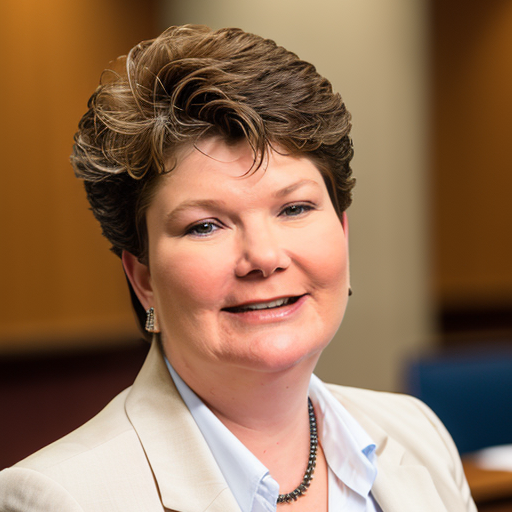
Dr. Tracee J. Swank guides Kingdom-minded leaders, churches, and entrepreneurs to clarify their purpose, reimagine mission, and multiply hope—so they can lead entrepreneurial movements that transform communities and advance the Great Commission.