
Outreach often feels complicated. We talk about strategies, branding, relevance, and programs. But when you strip it down, it may not be that difficult at all: find a real need in your community, and faithfully try to meet it. Then stick with it.
For the Christian church, this isn’t a marketing idea—it’s obedience.
Scripture repeatedly calls God’s people to care for the most vulnerable. “Widows and orphans” are named again and again in the Bible, not because they were the only ones who suffered, but because in the ancient world they represented those with no protection, no economic power, and no social safety net. Without a husband, father, or extended family, widows and orphans were easily exploited, ignored, or left to survive on charity. God’s concern for them reveals something deeper: God’s heart bends toward those the world forgets.
So the question for us is not whether we should reach out, but who is vulnerable now.
Who Are the Vulnerable Today?
The vulnerable are those who are disenfranchised—people who are pushed to the margins, whose voices are diminished, and whose needs are often unseen or unmet by existing systems. Disenfranchisement means lacking power, access, dignity, or belonging.
In our context, one such group became impossible to ignore: people living with dementia and those who care for them.
In Canada, over 600,000 people are currently living with dementia, and that number is expected to more than double within a generation. In the United States, more than 6.7 million people aged 65 and older are living with Alzheimer’s disease or related dementias, with projections reaching nearly 13 million by 2050. In both countries, the vast majority of care is provided by family members—often spouses or adult children—who experience high levels of stress, isolation, depression, and burnout.
Dementia doesn’t just affect memory; it slowly erodes relationships, routines, and a sense of self. And many families quietly disappear from church life because worship, conversation, and community begin to feel inaccessible.
Recognizing the Gifts Already Among Us
We didn’t begin with a grand plan. We began by paying attention.
One of our parishioners happened to be a gifted choral conductor. We had a piano. We had a building. And we had a growing awareness of a need that wasn’t being met in our community.
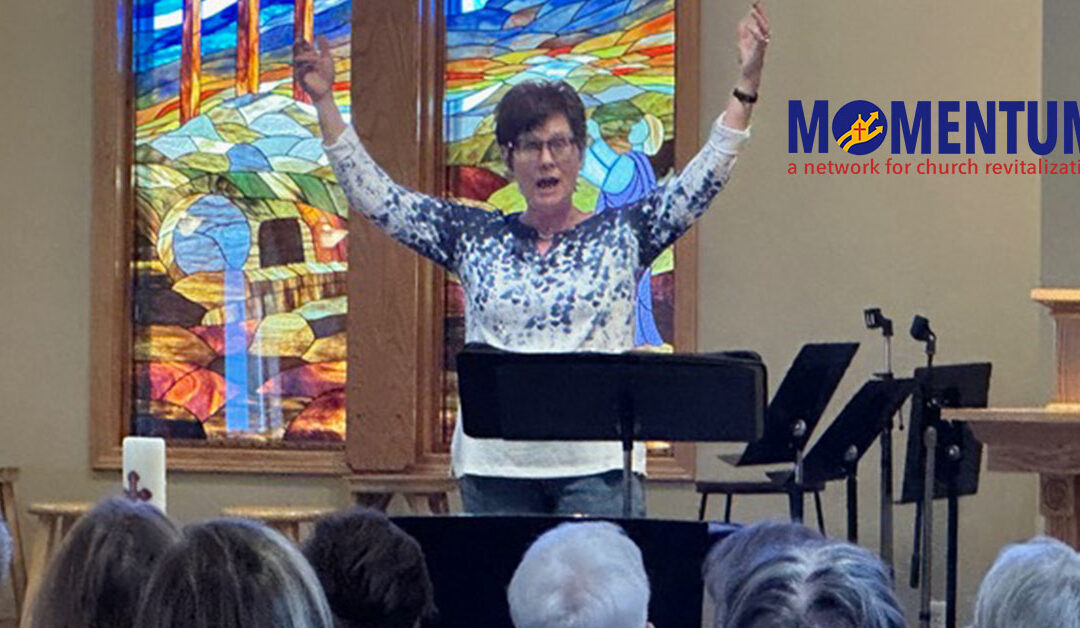
So we asked a simple question: What if we started a dementia-friendly choir?
The choir would be open to people living with dementia, their caregivers, volunteers (whom we call Ambassadors), students, and members of our own congregation. No auditions. No pressure. Just music, welcome, and shared humanity.
If you’re wondering what it takes, here’s the honest list:
- Someone who can play the piano
- Someone willing to conduct
- A space to gather
- A church ready to open its doors
That’s it.
What Happened Next
We started small—and stayed faithful.
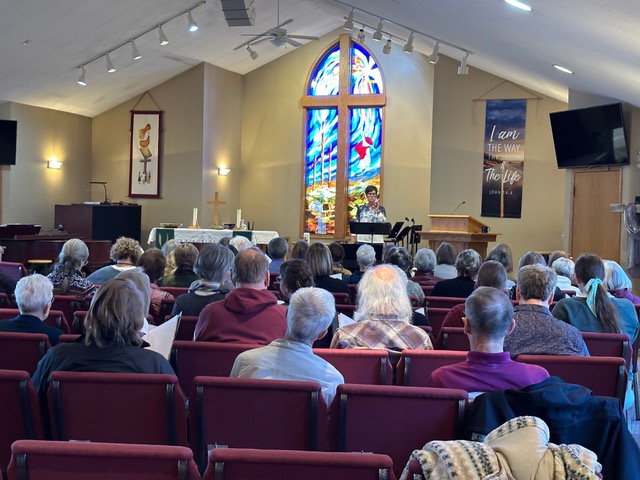
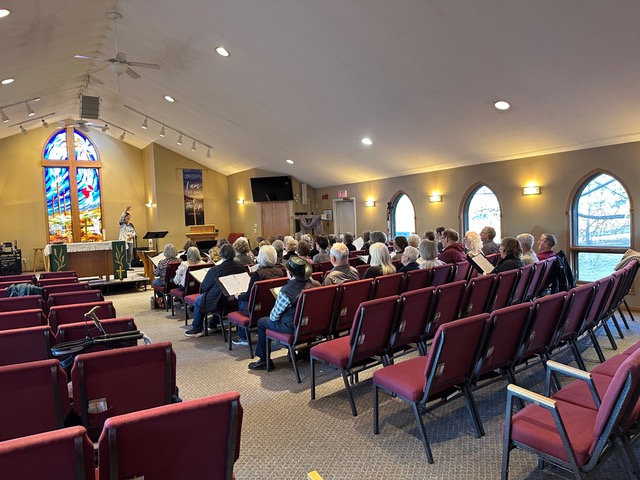
In a year and a half, beginning this past January, that one choir became three:
- One at our local church with over 75 choristers
- One in a community hall with 45 participants
- One in a long-term care facility with 50 residents, including a memory-care unit
Something else happened too. Our church gained a reputation—not for slick programming, but for compassion.
“Oh, you’re from St. Peter’s? You’re the church with the dementia choir.”
Local radio and television stations picked up the story. Every interview pointed back to the church—not as a brand, but as a place of care and presence.
When Outreach Becomes Relationship
Members of our congregation didn’t just support the choir—they became part of it. They sang alongside people living with dementia, caregivers, students, and Ambassadors. Week after week, they rubbed shoulders, shared music stands, laughed at missed entrances, and learned one another’s names.
In that shared space, the usual lines between “church member” and “community participant” quietly dissolved.
Relationships formed—not through programs or pressure, but through presence. Conversations happened during coffee breaks and while putting on coats. Stories were shared. Trust grew, and now we have a few of those choristers attending our worship on Sunday morning.
This Is What Outreach Looks Like
This is not about becoming all things to all people. That path usually leads to exhaustion and shallow impact.
Instead:
- Find a real need in your community
- Discern where your people’s gifts already are
- Niche down
- Be faithful, not flashy
This is what Christian outreach looks like when it takes the gospel seriously. Presence before programs. Care before conversion. Faithfulness before results.
Find the need.
Fill it.
Stick with it.
And trust that God is already at work there—long before you arrived.

Rick Bergh, pastor of St. Peter’s Lutheran Church in Cochrane, Alberta, brings over 40 years of bi-vocational experience, blending real-world insight with ministry. Founder of the Pastoral Ministry Certificate and Shepherd Pathway programs, he helps people reframe their stories with God through books, speaking, and podcasting. He supports his wife Erica, a choral conductor for dementia choirs, and together they enjoy six grandchildren.